A stone’s throw from the Quai Georges Petit, where MERveille will set up its stands in April 2027, the underwater scenery changes within a few fin strokes. In the Cerbère-Banyuls reserve, around 650 hectares protected since 1974, more than 1,200 animal species and around 500 plant species have been recorded. Here are a few of its emblematic inhabitants and landscapes.
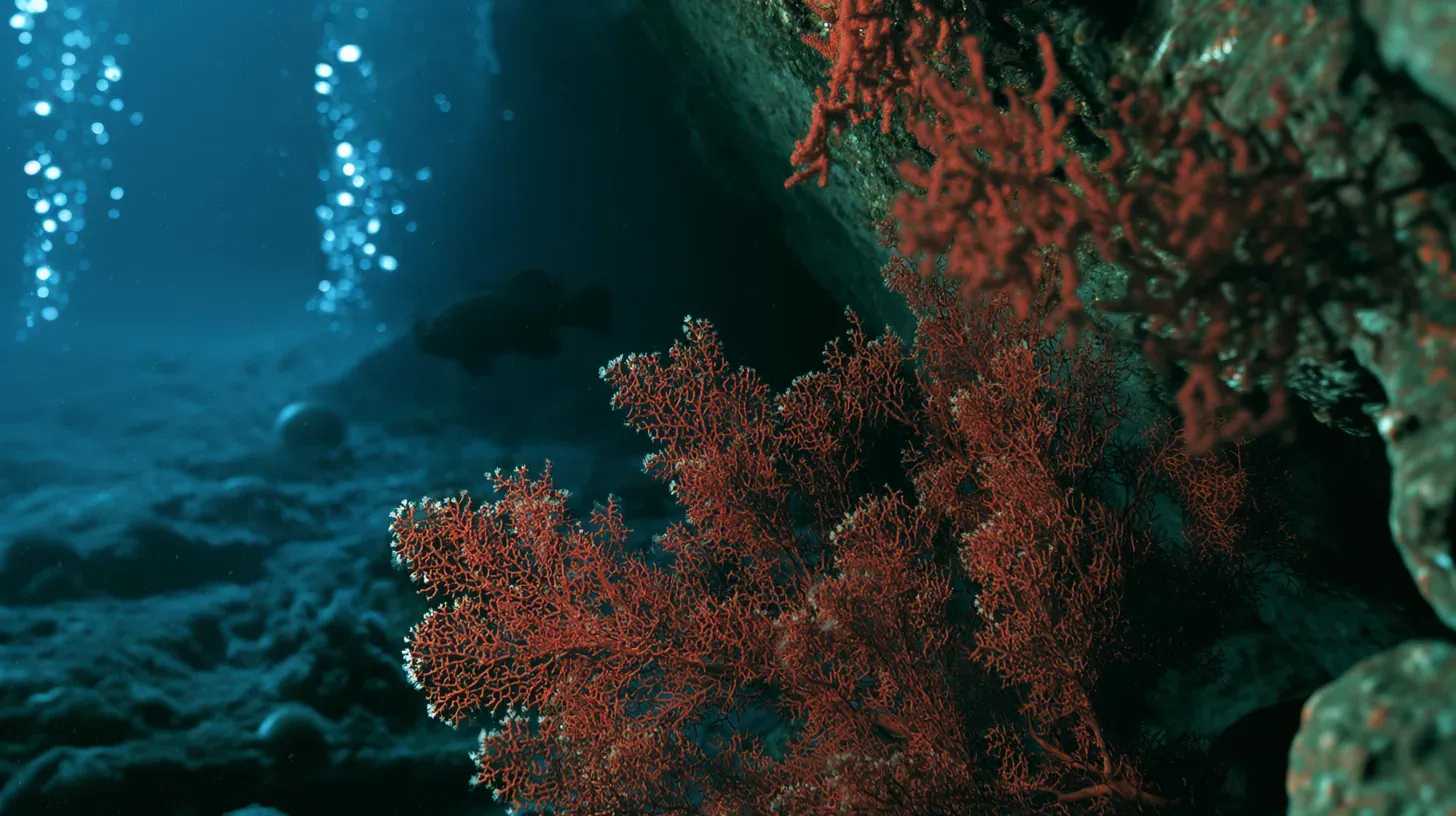
Red coral
A jewel of the Mediterranean, red coral colonises shaded walls and overhangs from Banyuls to Cerbère. Very slow-growing and long harvested, it is a species whose collection is now strictly regulated.
Gorgonians and coralligenous reefs
The gorgonians, red or yellow, raise their fans into the current. They give structure to the coralligenous reefs, formations built up by calcareous algae that shelter an abundance of life. Landscapes that the researchers of the Banyuls Oceanological Observatory (the Arago Laboratory, created in 1881) have practically on their doorstep.
The return of the grouper
Long a rare sight, the dusky grouper is resurfacing in the protected zones of the Mediterranean, including that of Cerbère-Banyuls. Its presence is often read as an encouraging sign for a site, even if it is not enough, on its own, to sum up its health.
Posidonia, the foundation of everything
Beneath the posidonia meadows lies all that matters: nurseries, oxygen, the stabilising of the seabed. A marine plant, and not an alga, that shapes life along the coast. These meadows are also where the noble pen shell anchors itself, the Mediterranean’s great seashell, today an endangered species.
To see them is to want to protect them
This is the whole wager of MERveille: to show these treasures so that people want to care for them. In the meantime, before April 2027, the Biodiversarium, the Banyuls aquarium, already lets you get close to them while staying dry.
These species and habitats are fragile, and sometimes protected: observe without touching or collecting, and respect the rules of each site.