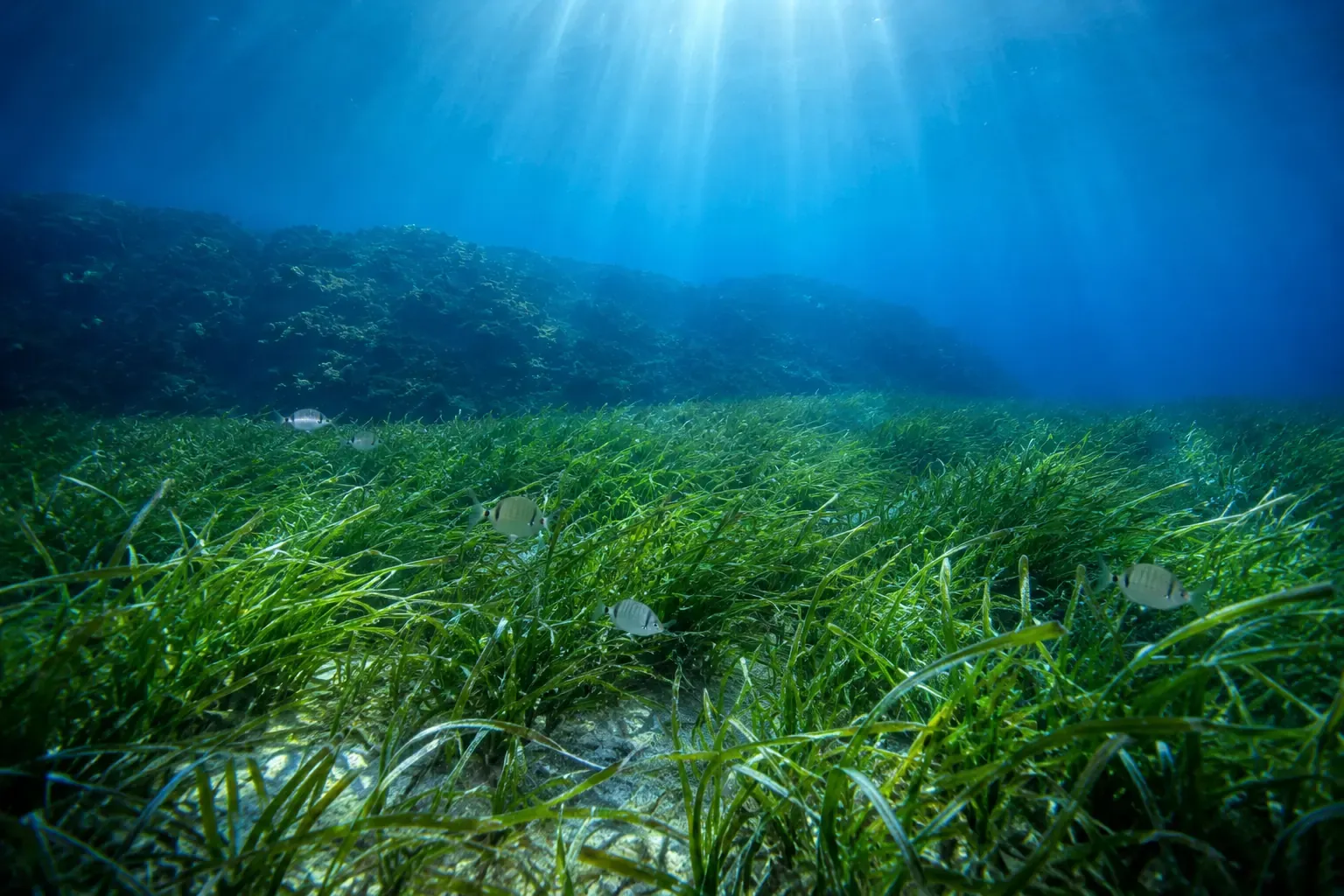
It is sometimes mistaken for a seaweed: posidonia (Posidonia oceanica) is in fact a marine flowering plant, endemic to the Mediterranean. Its vast meadows are often described as one of the most precious ecosystems along our coasts, and they are very much present in the Cerbère-Banyuls reserve.
Why the meadow is essential
- It shelters a wealth of biodiversity: a nursery and refuge for many species.
- It produces oxygen and stores carbon.
- It protects the coastline by softening the energy of the waves and holding back sediment.
A fragile ecosystem
The posidonia meadow is sensitive to anchoring, coastal development and any decline in water quality. Its growth is very slow: a few centimetres a year at most, which means a damaged meadow takes a very long time to recover. On the Côte Vermeille, these underwater prairies are home in particular to the fan mussel, a large shellfish now endangered. Preserving the meadow therefore also means preserving those who live in it.
Those brown piles on the beach: the banquettes
In winter, the sea deposits thick mats of russet dead leaves on the sand. Many people mistake them for litter or stranded seaweed: these are posidonia banquettes, and they serve a precise purpose. By absorbing wave energy and holding the sand in place, they shield the beach from erosion during storms. Clearing them away systematically means exposing the shoreline, and then having to truck sand back in.
Their smell, often held against them, is simply plant decomposition, much like a pile of leaves in a forest. Some coastal towns leave them in place out of season and clear only part of them in summer, a compromise between bathers’ comfort and protecting the shoreline.
The diver’s part to play
Mastering your buoyancy, never anchoring in the meadow, taking nothing away: these are all simple habits that help preserve the ‘green gold’ of the Mediterranean.
To find out more, the scientific teams at the Banyuls Oceanological Observatory study these habitats: a subject at the heart of the festival’s Protect strand.