From the coves of Banyuls, the coastline runs south without the sea ever marking the border. Barely a few miles away, Catalonia continues the same underwater landscapes, and the same need to protect them.
An ecological continuity
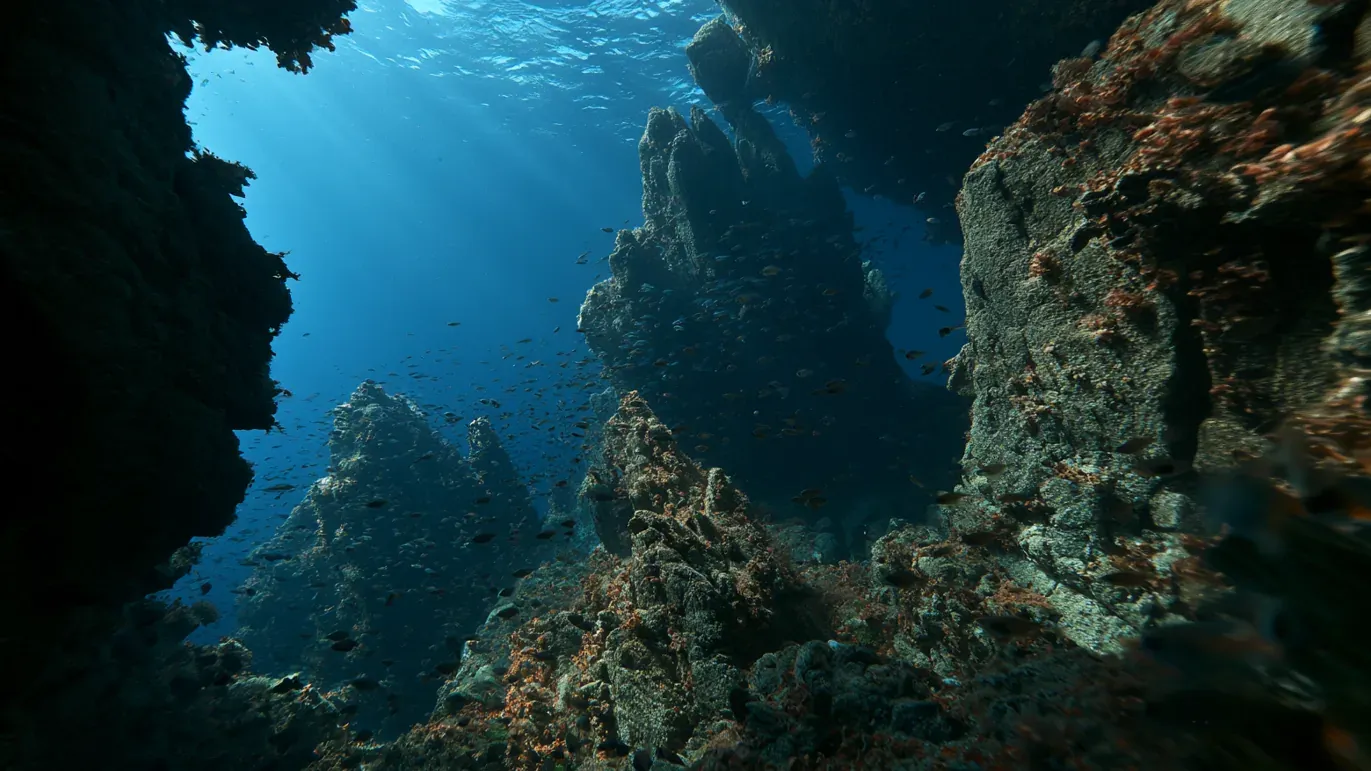
The seabeds of the Côte Vermeille and the Costa Brava form a continuum: the same posidonia meadows, the same coralligenous reefs, the same gorgonians, the same challenges. What happens on one side of the border concerns the other.
Catalan dive sites worth knowing
Beyond Cerbère, the cap de Creus, a close neighbour of the Côte Vermeille and Catalonia’s first marine and terrestrial nature park, offers spectacular drop-offs. Further south, the illes Medes, off l’Estartit, rank among the marine reserves best known to divers in the Mediterranean.
A natural partnership
Research, management of marine areas, awareness-raising: cooperation between Occitanie, Catalonia and Spain gives the region a European dimension and strengthens the protection of shared seabeds.
MERveille, a bridge between two shores
The festival embraces this cross-border calling: welcoming visitors and partners from both sides of the border, around a shared sea.
Regulations and access vary from one country and one reserve to another: always check with local organisations before diving.